
Most young golfers can see whether a putt missed left or right. It is much harder to judge how consistently they control distance. This drill makes both dimensions visible and measurable.
What you'll need
- Putter and ten golf balls
- A bag of flat ball markers
- Measuring tape
- A practice green and one chosen starting spot
Choose a putt that is appropriate for your child's ability. Keep the same starting spot for all ten attempts. Use a relatively level putt at first, then introduce more break.
How to play
- Choose one hole and mark a single starting position.
- Have your junior golfer putt ten balls, trying to hole each one.
- After each ball stops, place a flat marker where it finished, then clear the ball before the next putt.
- After all ten putts, study the shape of the markers around the cup.
- Measure the full short-to-long spread and the full left-to-right spread.
- Record both numbers, discuss the pattern, and try another set of ten.
What the markers reveal
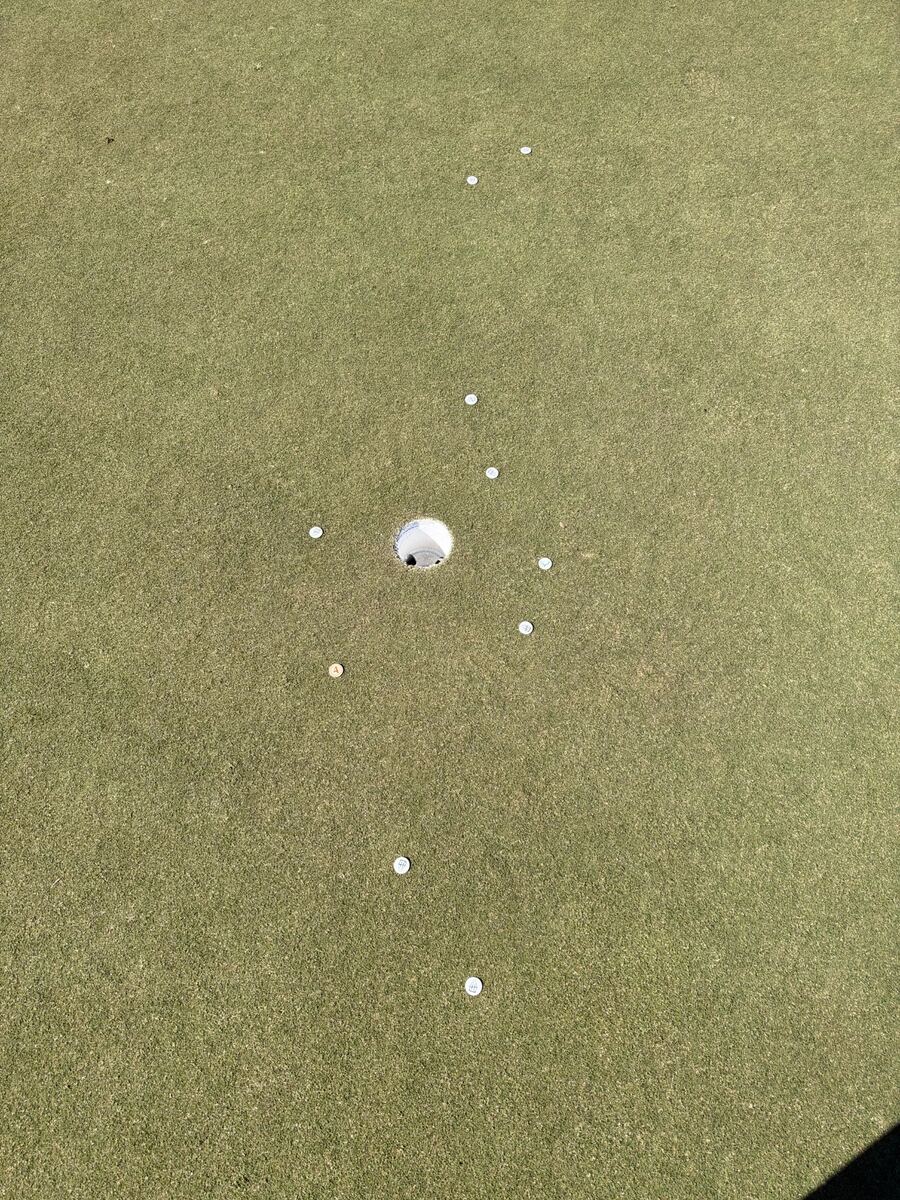
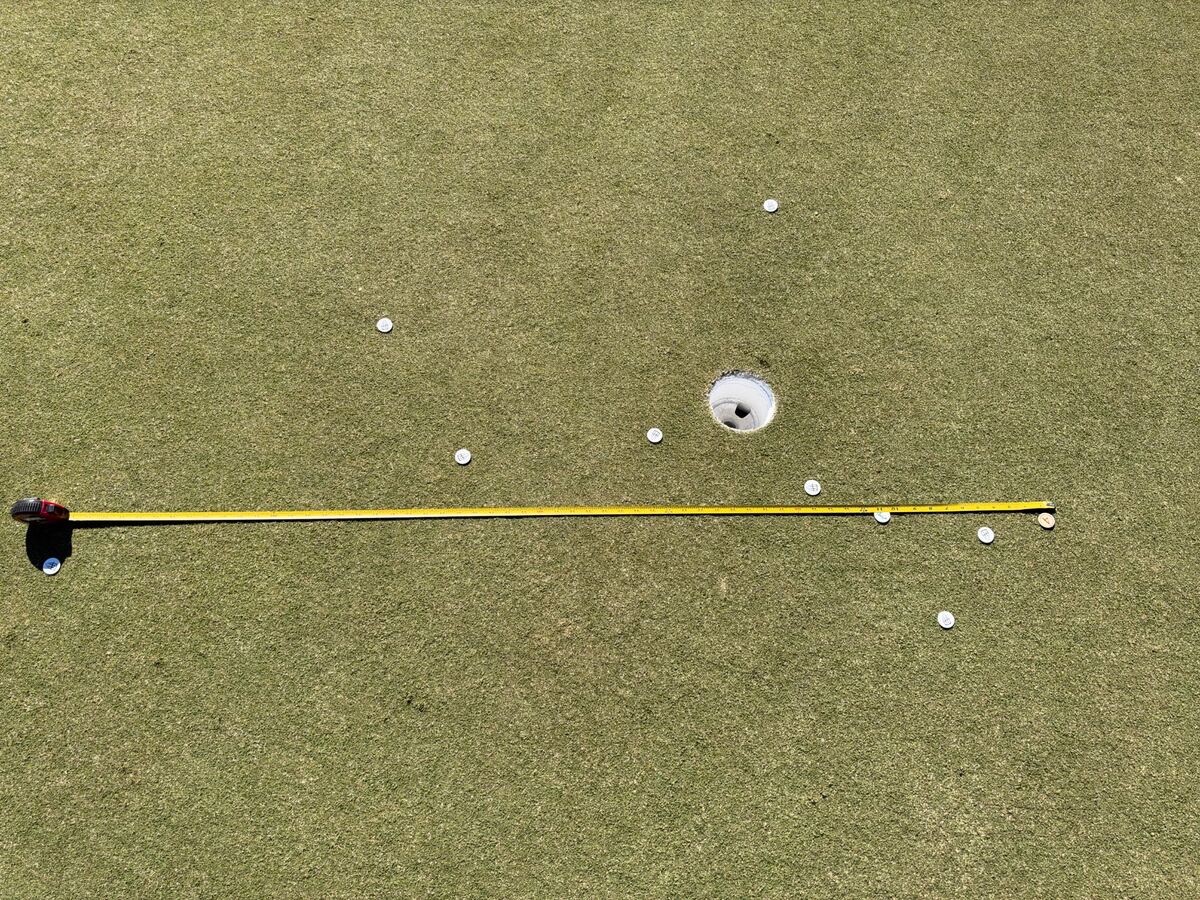
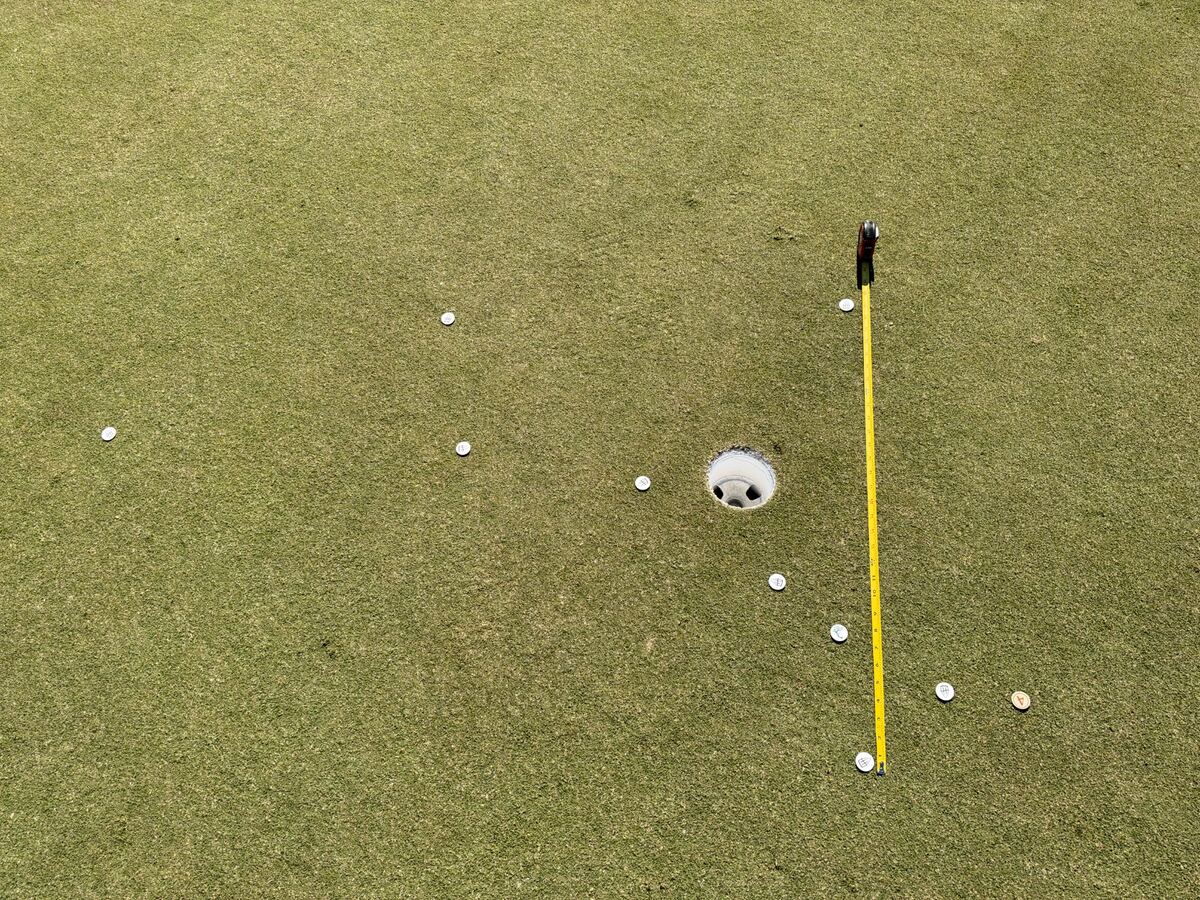
The lesson: distance control is a skill
Compare the two measurements. On many attempts, the short-to-long pattern will be larger than the left-to-right pattern. That helps your junior golfer understand why choosing a line is only part of putting: the ball must also arrive with the right pace.
Too many short? The ball never reaches the cup, so it cannot fall in. Too many long? Faster putts have less effective capture width at the hole and can leave a challenging comeback putt. The goal is a smaller overall spread with a controlled finishing speed.
Watch: The Putting Footprint — Speed Matters
See how ten putts reveal your speed tendencies—and how to measure the footprint they leave behind.
Original on-green demonstration showing how the markers and tape measure make putting dispersion visible.
Track your progress
After each ten-putt set, record:
- Starting distance and green conditions
- Number holed
- Short-to-long spread (inches)
- Left-to-right spread (inches)
- Number short versus long (excluding holed putts)
Challenge: Repeat the drill on another day and see whether you can shrink the long-axis spread without sacrificing your putting line.
Coaching tip for parents
Let your junior golfer describe the pattern before offering advice. Ask:
- “Which direction had the bigger spread?”
- “Did more putts finish short or long?”
- “What change could help you control distance?”
Celebrate noticing and learning—not just making putts. For younger players, use fewer balls and a shorter putt before working up to ten.